

In the world of nutrition, there’s always a new villain. First, it was fat, then sugar, then gluten. Now seed oils are taking the top spot.
If you’ve spent any time on social media or in health-conscious circles, you’ve likely heard someone claim that seed oils are the root of all chronic disease, inflammation, obesity, and metabolic issues. On the other hand, organizations like the American Heart Association are still claiming they’re perfectly safe and even beneficial for heart health.
So, what’s the truth? Are seed oils truly harmful, or is this just another overhyped nutrition scare? Let’s break it down.
Rather listen than read? We have a podcast on seed oils where we dive in deeper- listen to it here.
What are seed oils?
Seed oils are vegetable oils extracted from seeds through processes that often involve high heat, solvents, and refining. Some examples are:
- Canola oil
- Corn oil
- Cottonseed oil
- Soybean oil
- Sunflower oil
- Safflower oil
- Grapeseed oil
- Rice bran oil
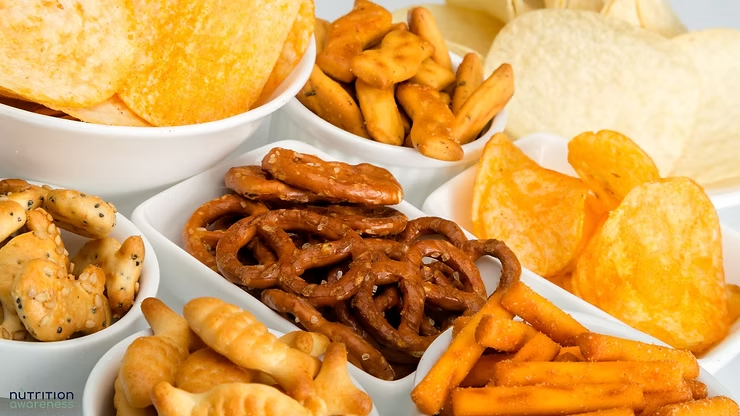
These oils are commonly found in processed foods like cakes, cookies, crackers and chips, fast food, salad dressings, and even health foods marketed as “natural.”
The controversy around seed oils comes from a few key concerns:
1. They are high in omega-6 fatty acids
Seed oils contain high amounts of omega-6 fatty acids, a type of polyunsaturated fat. While our bodies need omega-6s, an excess—especially compared to omega-3s (found in fish, flaxseeds, and walnuts)—is believed to contribute to inflammation and chronic disease.
2. The processing & oxidation the oils go through
Most seed oils are refined using high heat and chemical solvents, which can create oxidized fats. These fats may contribute to oxidative stress in the body, a process linked to aging, inflammation, and certain diseases.
3. Seed oils are mostly found in highly processed foods
One of the major reasons people feel better when they cut out seed oils is a no brainer: they’re removing ultra-processed foods from their diet. If you aren’t eating fried foods, packaged snacks, and fast food, you are probably going to feel a whole lot better, and maybe even lose weight, lower inflammation, and improve your blood sugar, blood pressure, and cholesterol.
Ok, But Are Seed Oils Really That Bad?
Like most nutrition topics, the truth is somewhere in the middle. I’ve heard really smart, respected people in the nutrition world argue that seed oils are not toxic and even that they are heart healthy and anti-inflammatory.
My stance: The body can process small amounts of seed oils just like any other fat. The real issue is the overconsumption of ultra-processed foods where these oils are commonly found. I don’t think that there is one villian in the world of nutrition, but I also don’t think you’re going to be any healthier by including seed oils in your diet. Personally, I use unrefined avocado oil or grass-fed butter when I’m cooking food to a high temperature, extra virgin olive oil when I’m not heating it (for making dressings and marinades), and unrefined coconut oil for baking.
If you want to reduce your processed food intake, cutting out seed oils can be a great way to do that. If you’re cooking at home, using the above oils are easy swaps.
I would not recommend stressing over every trace of seed oil in restaurant meals. Focus on an overall healthy diet, rather than demonizing a single ingredient.
If you do want to cut back on seed oils, focus on:
- Cooking at home with olive oil, avocado oil, or grass-fed butter
- Reading ingredient labels on packaged foods
- Choosing whole, unprocessed foods over ultra-processed options
After weeks of research, I’m going to treat seed oils similarly to how I treat sugar. I will continue to look at labels and see what’s in there. If there’s an alternative using a better oil for a price that’s not outrageous, I’m going to choose that option. It’s the same thing I do when I look at something like yogurt. I choose the one that tastes great, has nothing artificial and has less sugar. That said, I’m still going to eat a brownie
After digging into the research, I’ve decided to treat seed oils the way I treat added sugar: read labels, weigh the options, and pick the cleaner choice when it’s reasonably priced. If there’s a product made with a higher-quality oil, that’s the one that lands in my cart—just like I reach for a yogurt that tastes good, skips the artificial stuff, and keeps the sugar low. That said, I’m still going to eat a brownie from time to time and not care if whoever made it used canola oil. I’m still going to go out to restaurants that use seed oils (because 99% of them do), but shout-out to some local Orlando options that don’t:
- JJ’s Scratch Cocina
- Bolay
- Fresh Kitchen
- Hunger Street Tacos
- 4Rivers
I’m not going to go cold turkey and cut seed oils completely out, but I am going to pay attention.
At the end of the day, nutrition is about patterns, not perfection. Focus on what makes you feel good, stay informed, and try not to get too wrapped up in the latest food fear trend.
About the author: Megan Ware, RDN, LD, is a registered dietitian nutritionist in Orlando, FL. She owns the private practice, Nutrition Awareness, where she teaches other entrepreneurs how to maximize their productivity and performance with nutrition. She is the author of the book The Optimized Life: A Nutrition Guide for Entrepreneurs and co-host of the Nutrition Awareness Podcast.